DRAMA GAMES ENCYCLOPEDIA for KIDS
Organized by Core Concepts and Acting Skills
Explore over 50 drama games and creative theater activities for young people
organized by the acting skills and concepts they teach, making it easy to find the right game for your class or rehearsal.
Each game includes step-by-step downloadable instructions and a teaching video.
This free resource is part of the creative dramatics curriculum from Curtains Up Acting Studio.
Prefer to browse by game title? Visit The Drama Games Encyclopedia A-Z
browse by core concepts and acting skills:
WARMUPS
BODY AWARENESS AND VOCAL PROJECTION
STAGE CONVENTIONS AND TECHNIQUES
CONCENTRATION AND LISTENING
COMMITMENT | TEAMWORK | CHARACTER
MOTIVATION | IMAGINATION | STORY
Warm-ups
The tools of the trade for actors are their bodies and their voices. Make sure they’re ready to go!

Focus your group with this quick warm-up that encourages attentive listening and concentration.

With eyes closed, students count to ten as a group with only one student speaking at a time.

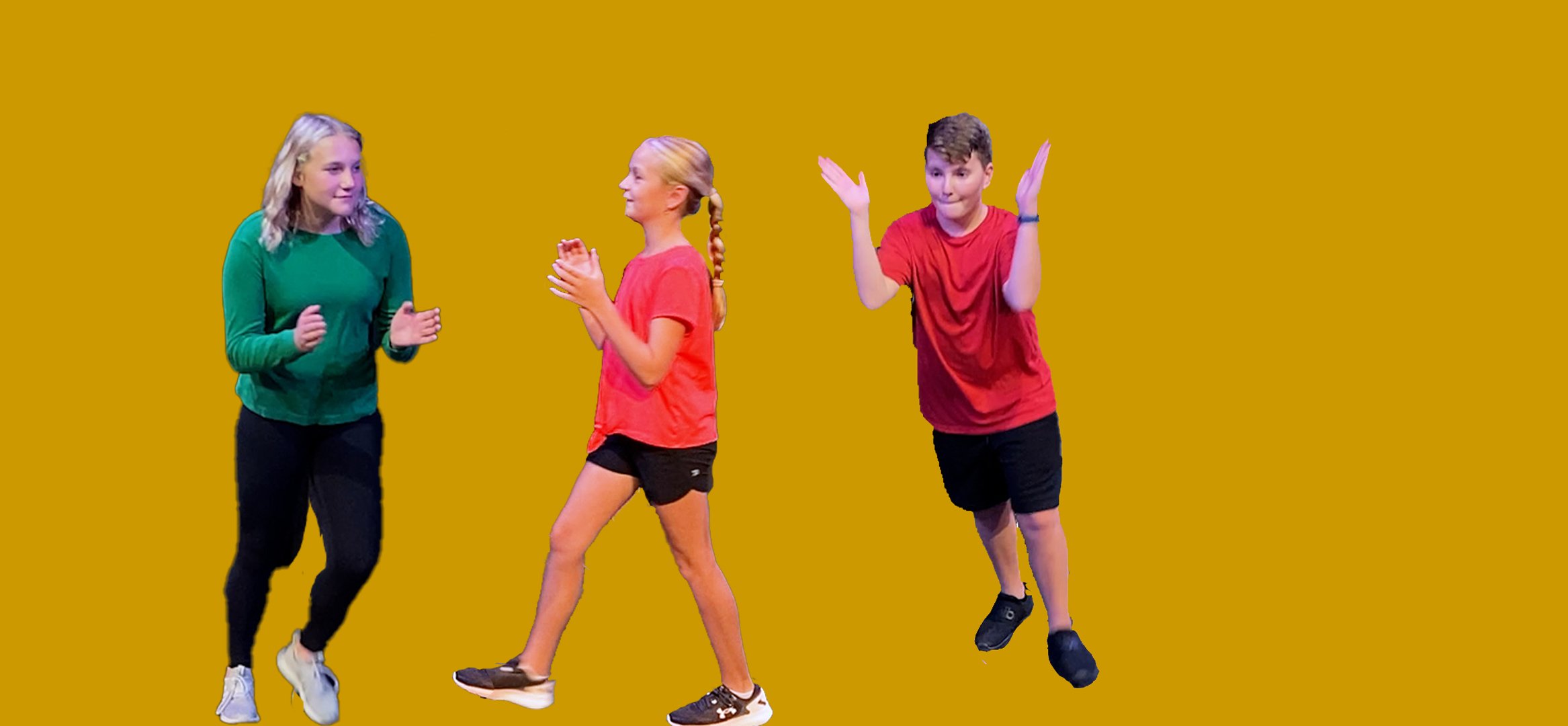
A fast-paced physical warm-up where students go from standing to lying on the floor and back on increasingly shorter counts.

Actors are given a category and must quickly name five things that fit.

Students hold hands across a circle to create a “human knot,” and then try to untangle themselves to form a single circle without letting go.

A simple vocal warm-up exercise teaching projection and proper breath support.

In pairs, one student mirrors the movements of the other as precisely as possible.

Students receive and mimic a rhythmic motion and sound, then transform it before passing it on in this energetic movement warm-up.

A game for learning names in a group by connecting each student’s name with an action improvised by that student.
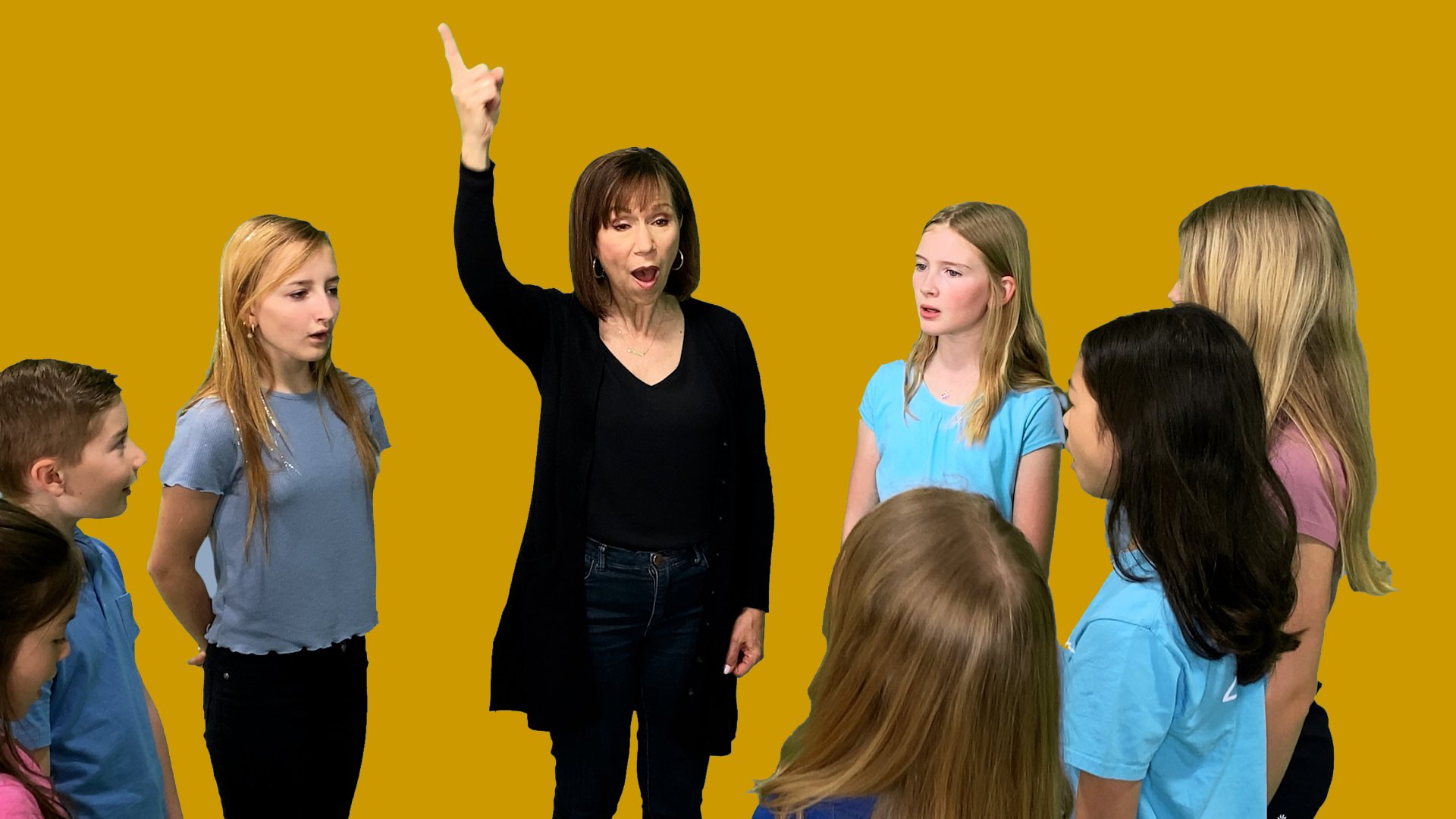
Students glide their voices from low to high and back to warm up their full vocal range and develop breath support.

A fun warm-up where students pass an imaginary ball around a circle with improvised sound effects.

Students mime throwing water balloons and ducking while learning names in this creative group game.

An energizing warm-up where students shake each hand and foot while counting down from ten to one, increasing the pace with each round.

Students practice projection and proper breath support as they imagine sending their voices to the far side of the room.

Clarify the pronunciation of words and stretch the muscles you use to speak, in this lesson using tongue twisters.

A fast-paced warm-up where students pass an imaginary car around a circle as increasingly complex commands are introduced.
Body Awareness and Vocal Projection exercises
Acting Skill: Learning how to control your body and voice for clear, expressive performance.


BODY AWARENESS: Students increase body awareness by walking with different body parts leading, as directed by the game leader.

Group Sculpture Masterpiece
BODY AWARENESS:
Students create a group sculpture with levels and visual interest by joining a frozen stage picture one at a time.
VOCAL PROJECTION: Teach vocal projection by helping students understand breath support, vocal control, and the connection between body and voice.

BODY AWARENESS: Students take turns acting out an emotion without words for other students to guess.
BODY AWARENESS AND VOCAL PROJECTION: Students copy and transform movements and sounds as they are passed from one person to another.

BODY AWARENESS: Students practice physical control by maintaining frozen positions while a leader tries to catch them moving.
VOCAL PROJECTION: Explore how breath support and vocal control help actors project the full range of their voices clearly.
BODY AWARENESS AND VOCAL PROJECTION: Students connect movement, gesture, and sound while passing an imaginary ball around a circle.

BODY AWARENESS: Students imagine walking and moving through a series of suggested environments, changing their movement to fit each setting.

BODY AWARENESS: Students focus on posture, facial expression, and body position to create frozen stage pictures.
VOCAL PROJECTION: A lesson in vocal projection and breath support, demonstrated by a teacher.

BODY AWARENESS: Students cross the stage embodying the physical traits of characters assigned by the game leader.
Stage Conventions and Techniques
Acting Skill: Learning basic stage vocabulary, and how to stand and move so the audience can see and understand the action.

A small group of students work together to create and bring to life a single object or piece of scenery named by the game leader.

A group of actors create three tableaux to capture the beginning, middle, and end of a fairy tale.

Students create a “human machine” one piece at a time, with each actor adding a rhythmic sound and action to form a single moving stage picture.

A beginner’s lesson introducing a few basic principles of mime.

One at a time, students use mime to paint an imaginary wall, each employing a unique method.
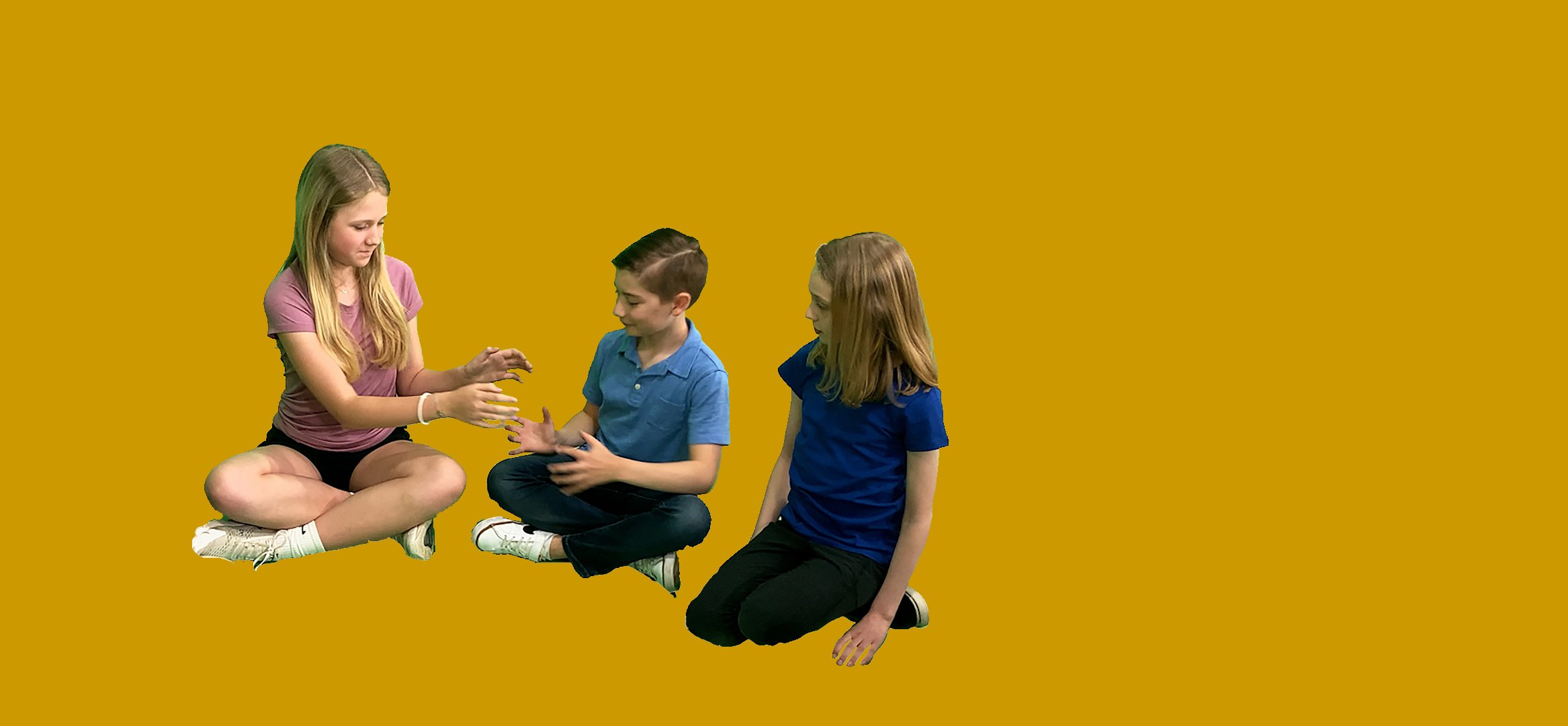
Using mime, students take turns opening an imaginary gift of their choosing.
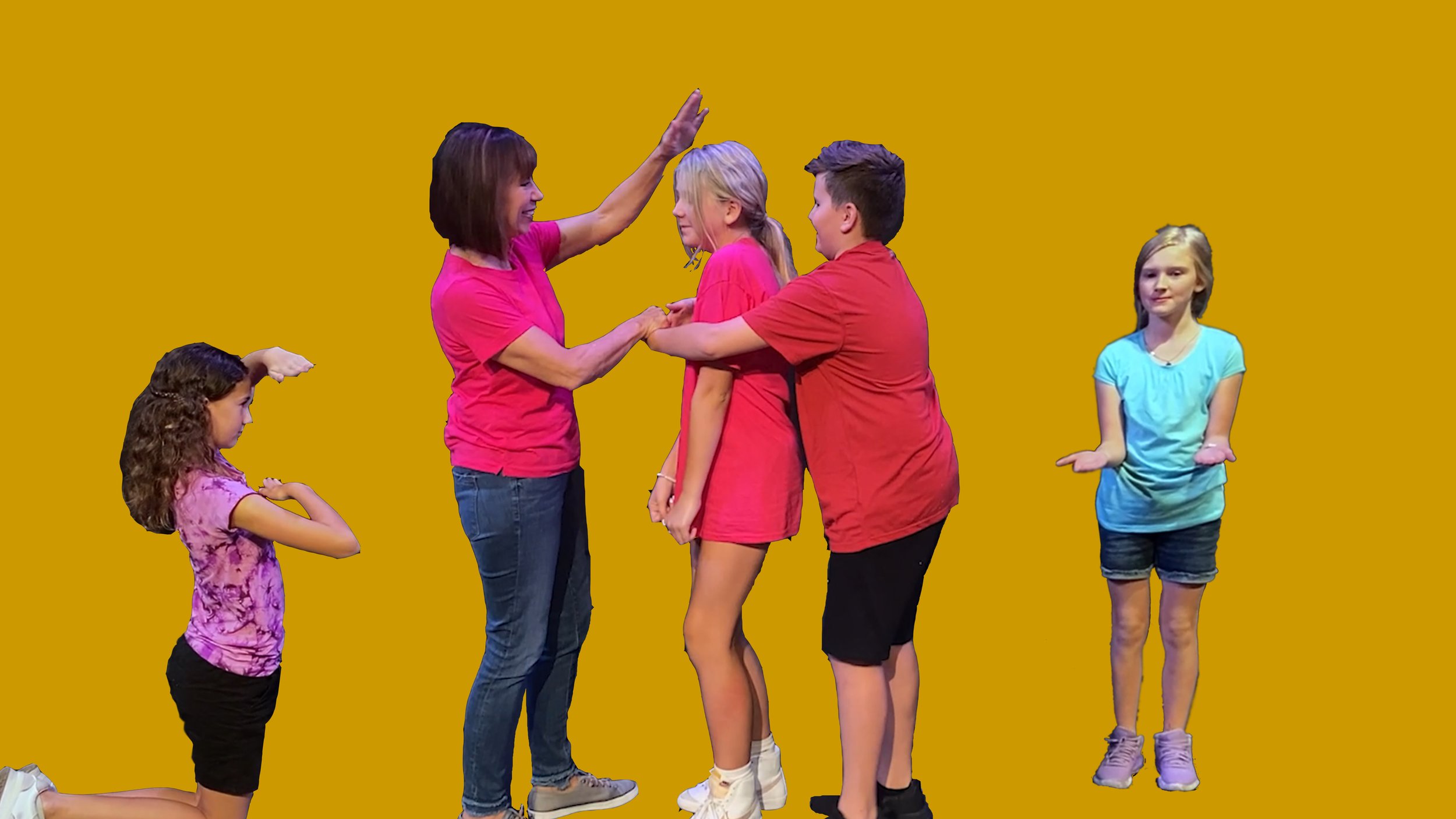
Scene Setting
Using mime, students build a scene one actor at a time while learning to how to create a clear picture for the audience.
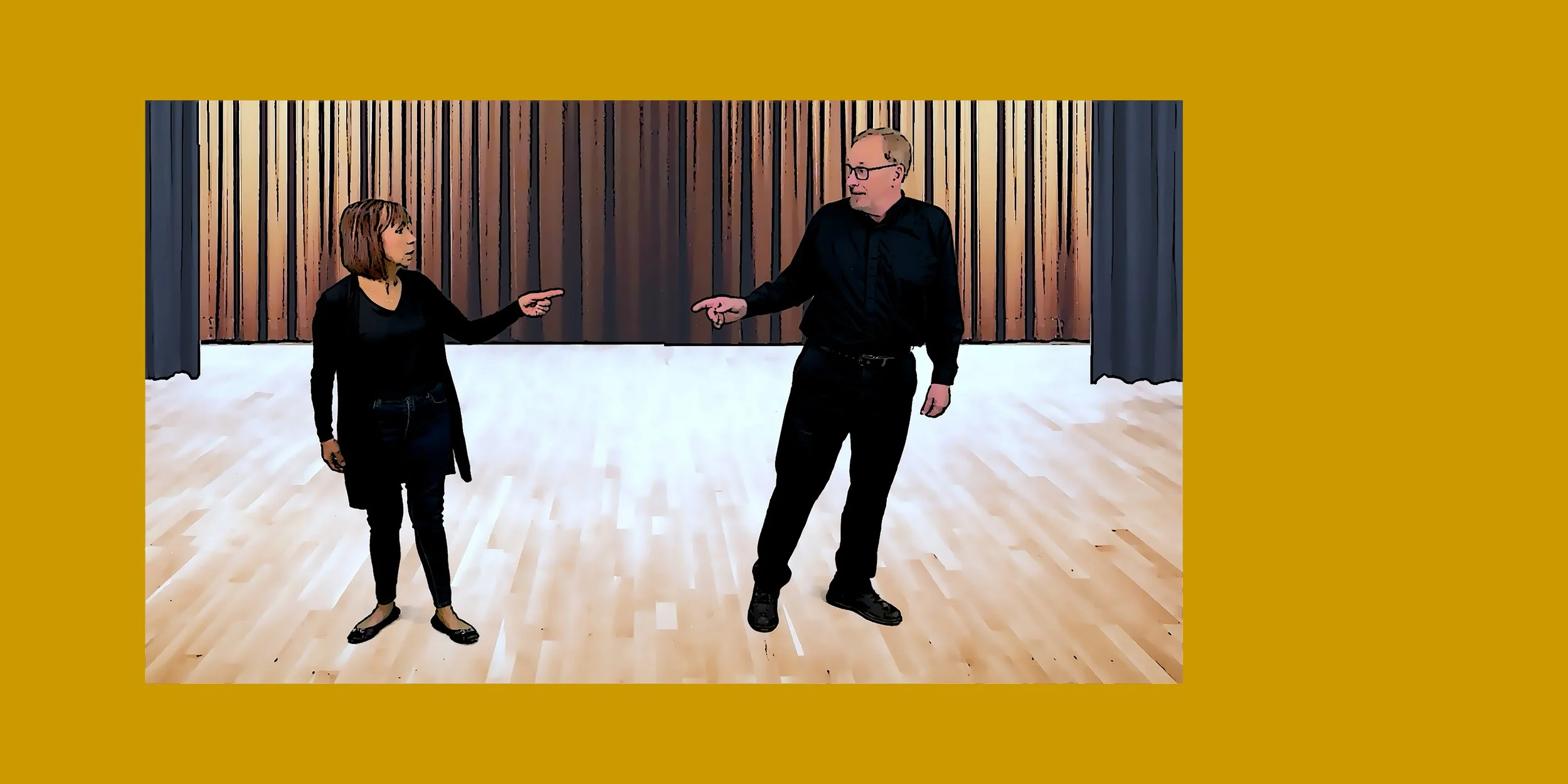
Stage Conventions: How to Stand and Move on Stage
A lesson in how to stand and move on stage in order to stay open and visible to the audience.

Stage Directions
A lesson explaining the parts of the stage and the meaning of common stage directions, including stage left, stage right, upstage, and downstage.
Tableaux
A step-by-step exercise for teaching students how create effective stage pictures using levels, point of focus, and interaction.
Concentration and Listening games
Acting Skill: Learning how to focus on the task at hand, stay “in the moment,” and listen and respond spontaneously to others on stage.
Introduce students to the concept of concentration and ensemble awareness with this simple theater exercise.
Develop concentration, timing, and group awareness as students count to ten together, each calling out one number at a time without knowing who will speak next.

Two actors improvise a scene until a third actor calls “freeze,” takes one actor’s place, and begins a new scene inspired by the frozen actors’ positions.
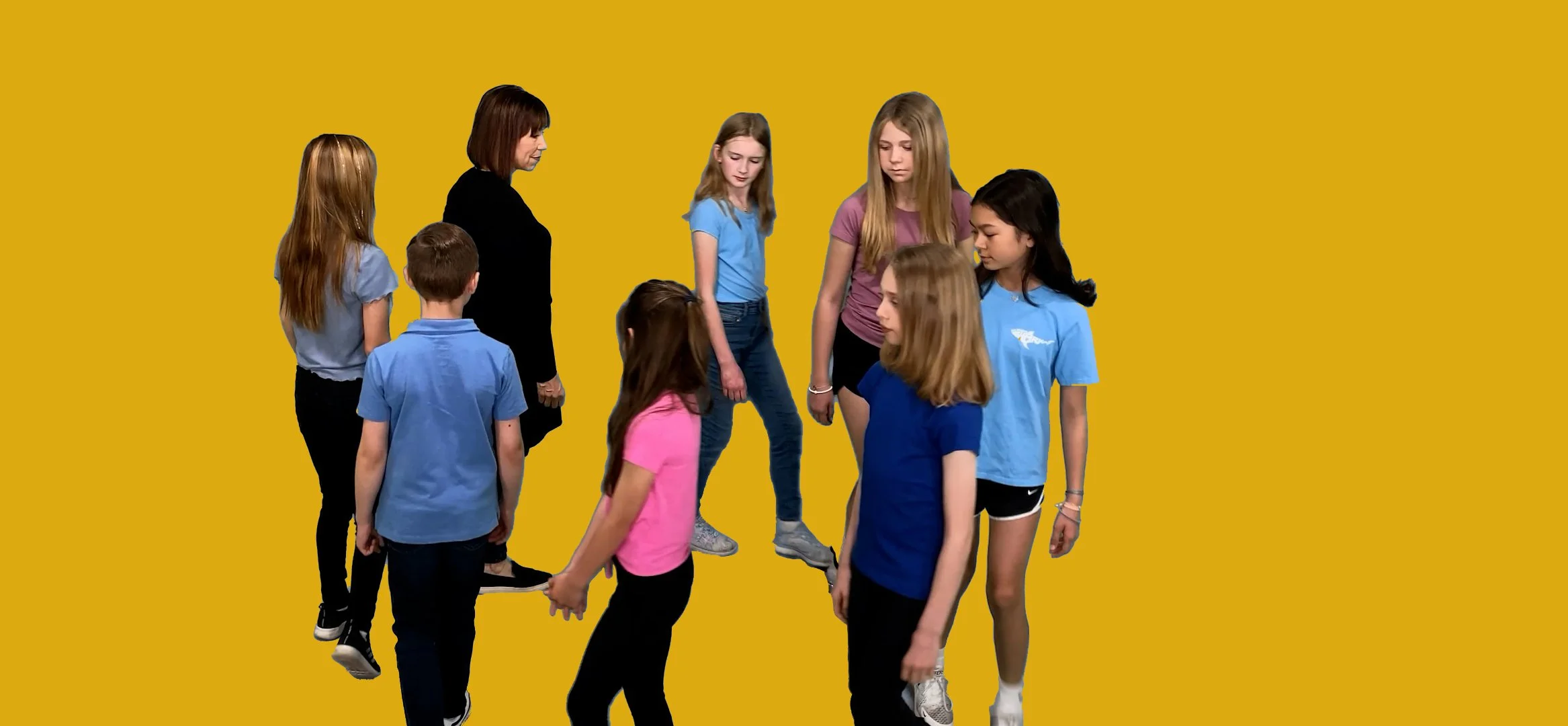
Students walk in a circle and silently start, stop, and change direction by watching one another and responding to nonverbal cues.

Group Mind
Students move around the stage performing the same rhythmic sound and action until someone spontaneously changes the pattern—at which point the rest of the group quickly matches the new movement and sound.
Students pretend to be statues—listening and watching carefully as they try to move only when a “guard” is not looking.
Actors practice listening and concentration in pairs, as each one takes turns mimicking the actions of the other as precisely as possible.


Two actors compete by listening carefully, thinking quickly, and instantly acting out the activities named by their partner.

Students in a circle carefully watch and imitate a hidden leader’s changing movements, while a student standing in the middle of the circle tries to tries to identify the leader.
Commitment games
Acting Skill: Learning how to fully commit to choices, actions, and characters, and how to perform with energy and confidence.

A group of actors perform a scene in a series of emotional states supplied by the game leader, fully committing to each new choice.

Actors quickly create frozen pictures depicting specific types of families suggested by the game leader, bringing energy and focus to their poses.

Actors pretending to ride in a car gradually adopt the unique behavior of each hitchhiker they pick up—embracing each new behavior completely.

Actors stay in character as they improvise a scene with a hotel desk clerk, responding to whatever happens.

Students use a piece of cloth as an imaginary object of their choosing and act it out clearly enough for others to guess what it is.

As students pass a series of objects around a circle, they must use each one as an imaginary prop—fully interacting with it until the other students guess what it is.

A small group of actors improvise a scene, raising the emotional intensity each time the game leader adds a new complication.

With a few lines, actors throw themselves into portraying a character created from a randomly chosen adjective and job title.
Pairs of actors challenge each other to rapidly mime actions they name—fully committing to each new activity.
Teamwork games
Acting Skill: Learning how to cooperate, communicate, and work effectively as an ensemble.
The game leader names a random object and a team of 6-8 actors work together to represent the object with their bodies.
Students walking in a circle attempt to stop, start, and change direction at precisely the same moment without speaking.
Group Mind
Students develop group focus by mirroring the rhythmic sounds and actions of everyone else in the group. When any group member changes the pattern of sound and movement, all change.
Group Sculpture Masterpiece
One by one, students form and add to a group sculpture based on a prompt from the game leader.
Develop teamwork and problem-solving as students cooperate to untangle themselves from a human knot to form a circle.
Actors work together to create a single machine with mechanical movements and sounds.

Teams of students compete to see who can most quickly assume the exact positions modelled by a leading group.

Small groups of students collaborate to create, rehearse, and perform a scene using random objects from a paper bag as props.
Actors work together to improvise a mimed scene that includes both characters and scenery, building it one actor at a time.

In a circle, students cooperate to create a story, with each student adding one sentence at a time.
Character games
Acting Skill: Learning techniques for creating interesting and convincing characters that fit the role you are playing.
Students explore creating characters by walking with different body parts leading their movement, and then respond as their characters in an improvisational interview.

Students practice observation skills, an important part of creating believable characters, by identifying three small changes their partners make in their appearance.

Three character qualities are “painted” on an actor, who then demonstrates them in a brief performance.
Students explore how emotions shape character, as they act out a scene in a series of strong emotional states named by the game leader.
Actors pose as characters representing specific types of families suggested by the game leader.
Actors pretending to ride in a car pick up the character quirks of one hitchhiker after another.
Actors adopt strong specific characters and interact with a hotel desk clerk in an improvised scene.

Actors explore how a character’s emotions and objectives influence the way they move on stage.
Actors instantly create characters based on a single adjective and a randomly assigned vocation.
Actors practice moving as specific characters named by the game leader.
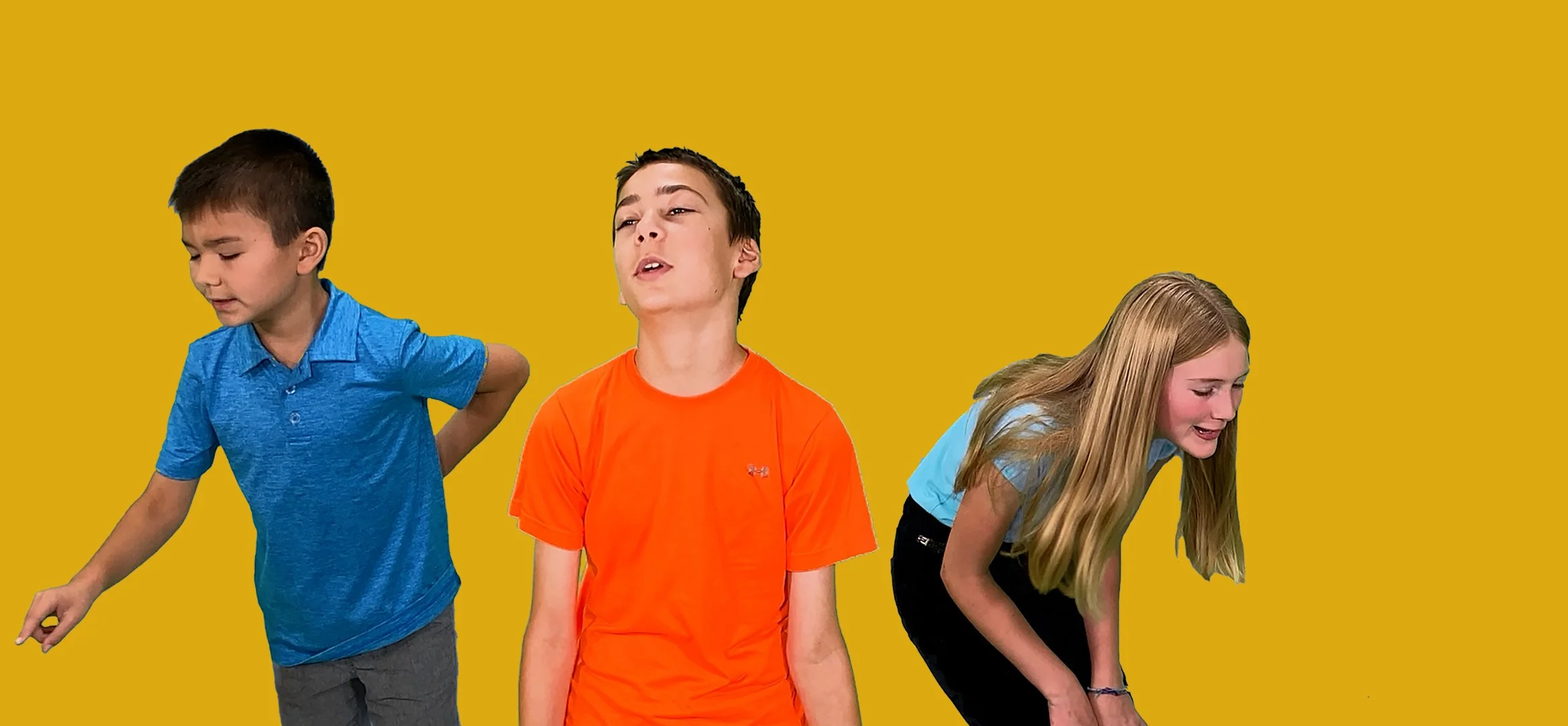
Students explore how characters in various situations might deliver the same line in different ways.
Imagination Games
Acting Skill: Learning how to bring creativity to your acting choices and respond naturally to imagined surroundings.
Strengthen imagination, spontaneity, and improv skills as students name lists of objects without overthinking.
Two actors improvise a scene until a third actor calls “freeze,” takes one actor’s place, and uses the frozen position to imagine and begin an entirely new scene.
Students take turns interacting creatively with a piece of cloth as though it were a prop other than cloth.
One at a time, students invent a creative way to mime painting an imaginary wall.
Students use random objects from a bag as imaginary props to inspire scenes they create and perform.
Students imagine a gift of their choosing inside a box, and then mime unwrapping it and interacting with it while others try to guess what it is.
Students take turns using random objects as props—imagining them to be different from the objects they actually are.
Students are given a title and must improvise an imaginative story as a group, with each student in the circle adding one line at a time.
Motivation games
Acting Skill: Learning how motivations and objectives shape a character’s movement, speech, and behavior.
Students explore how an inner feeling can influence the way a character moves and behaves by acting out emotions without words.
Actors are given three actions to perform on stage and must improvise the motivation behind each action.
Actors deliver the same line—each one delivering it with the subtext appropriate for a character and a situation assigned by the game leader.
Story Games
Acting Skill: Learning how to recognize and create stories with a beginning, a middle, and an end.

Actors create three frozen scenes that communicate a fairy tale through carefully composed stage pictures.
Each small group of students create and perform an original scene inspired by three random objects found in a paper bag.
In a circle, students tell a story with a beginning, a middle, and an end—with each student adding one sentence at a time.

Curtains Up Curriculum by Friends of the Groom Theater Co. is licensed under a
Creative Commons Attribution-NonCommercial-ShareAlike 4.0 International License. Curtains Up is a training program designed for young actors sponsored by Friends of the Groom Theater Company.
It is available to the general public for free under the terms of the Creative Commons License above.
VISIT FRIENDS OF THE GROOM THEATER COMPANY: